Atomic Rust: A Typeface for Bold Brand Stories
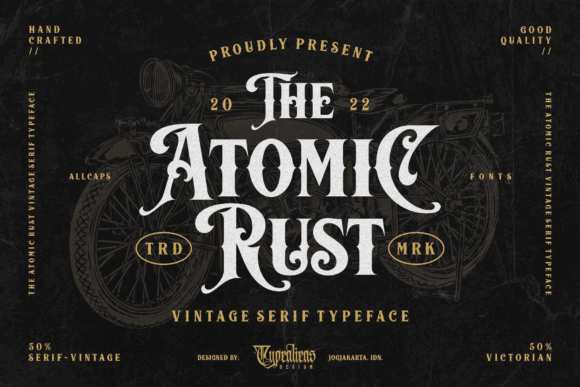
If you've ever worked on a project that needs to feel instantly established, rugged, and full of character, you know the challenge. You need a typeface that doesn't just sit on the page but tells a story before a single word is read. This is the space where Atomic Rust thrives. It's a vintage-inspired display font with deep roots in Victorian-era design, but its application is anything but stuck in the past. Think of it as a tool for injecting a sense of heritage and craftsmanship into modern branding, from a motorcycle shop's badge to a craft distillery's bottle label.
The visual personality of Atomic Rust is unmistakable. It's a serif font, but not of the quiet, bookish variety. Its letterforms are bold, with high contrast between thick and thin strokes, and feature intricate, decorative details—swashes, curls, and sharp terminals that give it a distinctly ornamental feel. This isn't a font for long paragraphs of body copy; it's a headline font, a logo font, a font for making a statement. Its "rust" isn't literal decay, but a metaphorical patina of age and authenticity, suggesting something built to last, whether that's a brand, a publication, or a piece of merchandise.
Where Atomic Rust Finds Its Home
The strength of a font like Atomic Rust lies in its versatility within specific creative lanes. It excels in projects where you want to evoke nostalgia, ruggedness, or a handcrafted sensibility. For logo design, particularly for businesses like custom auto garages, barbershops, breweries, or vintage clothing lines, it provides an instant foundation of heritage. It becomes the core of a brand identity, setting a tone that is both classic and bold.
In packaging design, its ornamental qualities shine. Imagine it on a whiskey label, a hot sauce bottle, or a box of artisanal coffee. The decorative serifs and swashes add a level of luxury and detail that feels intentional and premium. For editorial design, it can be a powerful choice for magazine mastheads, chapter titles, or pull quotes in publications focused on lifestyle, adventure, or craftsmanship. Even in digital design, it can be used strategically—think hero section headlines on a website for a vintage record store or as impactful text overlay on social media graphics promoting a new product launch with a retro theme.
Practical Guidance for Working with This Font
Choosing a creative font like Atomic Rust is just the first step. Using it effectively requires a bit of strategy. First, evaluate your project's fit. Does your audience respond to vintage aesthetics? Is the project's core message about authenticity, quality, or tradition? If the answer is yes, you're on the right track. Next, consider font pairing. Because Atomic Rust is so distinctive, it pairs best with something clean and simple to avoid visual clutter. A straightforward sans serif font for body text or a clean script font for supporting elements can create a beautiful hierarchy, letting Atomic Rust command attention without overwhelming the layout.
Always test for readability at the intended size. Its detailed serifs and swashes work beautifully at larger scales for logos and headers, but they can become muddled at very small sizes or in long lines of text. Check the font's included styles—does it come with alternates, ligatures, or different weights that give you more design flexibility? Finally, for any commercial project, verify the licensing. Ensure you have the correct commercial font license for your intended use, whether it's for a client's brand, a product you're selling, or digital assets you're distributing.
In the end, Atomic Rust is more than just a collection of letterforms. It's a design asset that carries a specific mood and history. When used thoughtfully, it doesn't just display text; it builds a world around it, making it an invaluable tool for designers and brand builders looking to create something with lasting character and visual punch.