Confident: A Stylish Handwritten Font with Timeless Appeal
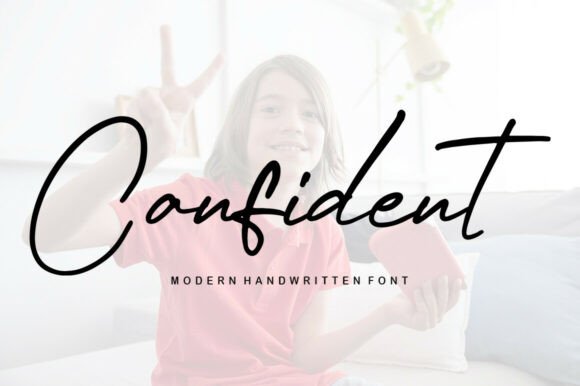
Finding a typeface that feels both personal and professional can be a real challenge. You want something with character, but it also needs to be versatile enough to work across different mediums. The Confident font strikes a compelling balance. It’s a stylish handwritten font with a contemporary atmosphere, drawing inspiration from classic calligraphy to create a look that is elegant, approachable, and impeccably formed. This isn't just another script font; it's a design tool built to enhance the beauty of your projects.
The Personality Behind the Letterforms
At its core, Confident is defined by its balanced and varied strokes. The letterforms have a natural, flowing rhythm that mimics the hand of a skilled calligrapher, yet they maintain a clean, modern sensibility. You’ll notice subtle variations in thickness that add depth and movement, preventing the text from feeling static or overly rigid. The overall aesthetic is one of refined confidence—hence the name. It feels trustworthy and sophisticated without being stuffy or overly formal. This makes it a particularly useful display font for projects that need to convey warmth, authenticity, and a touch of luxury.
One of its most practical features is its extensive character set. As a PUA encoded font, Confident gives you full access to all its glyphs and swashes. This means you can easily incorporate elegant flourishes, stylistic alternates, and decorative elements directly from your keyboard or design software’s character panel. For a designer or content creator, this opens up a world of creative possibilities without needing to hunt for additional assets.
Where Confident Truly Shines: Practical Applications
Understanding a font’s personality is one thing; knowing where to apply it is where the real value lies. Confident excels in contexts where you want to make a human connection while maintaining a polished edge. Let’s explore some realistic scenarios.
Branding and Logo Design
For logo design, a handwritten font like Confident can be a game-changer, especially for brands in lifestyle, beauty, wellness, artisanal food, or boutique retail. It instantly communicates a personal touch. Imagine it used for a bakery’s logo, a boutique consultancy’s wordmark, or the masthead of a personal blog. It sets a tone that is both creative and reliable. However, a key consideration is brand identity consistency. This font works best for brands that want to emphasize craftsmanship, individuality, and approachability. For a law firm or a tech startup focused on precision, a serif font or a clean sans serif font might be more appropriate.
Marketing and Digital Content
In the fast-paced world of social media graphics and web design, standing out is crucial. Confident can be used strategically for headlines, quotes, or call-to-action buttons to draw the eye and create a focal point. Its high readability at larger sizes makes it perfect for Instagram stories, Pinterest pins, or YouTube thumbnails. When used on a website, it can add personality to a hero section or an “About Us” page. The trick is to use it sparingly for impact, pairing it with a highly legible sans serif font for body text to ensure a smooth reading experience.
Publishing and Editorial Design
For editorial design, think of Confident as your secret weapon for adding emphasis and style. It’s an excellent choice for chapter titles in a book, pull quotes in a magazine article, or the title of a newsletter. It breaks up the monotony of standard text, creating a visual hierarchy that guides the reader’s eye. In packaging design, it can elevate a product’s perceived value. Picture it on the label of a handmade soap, a gourmet coffee bag, or a wedding invitation suite. It communicates care and attention to detail.
Making It Work: Font Pairings and Readability
The true test of a premium font like Confident is how well it plays with others. A successful font pairing creates harmony and contrast. Since Confident has a strong personality, it pairs beautifully with neutral, geometric typefaces. Try combining it with a simple sans serif font like Montserrat or Lato for body copy. The clean lines of the sans serif will provide a stable foundation, allowing the expressive nature of Confident to shine without overwhelming the design. For a more traditional or elegant feel, it can also work with a classic serif font, but ensure the serif isn’t too ornate to avoid visual competition.
Readability is non-negotiable. While Confident is designed for clarity, its handwritten style means it’s best suited for short bursts of text—headlines, logos, and accents. Avoid using it for long paragraphs or small body copy on screens, as the intricate details can become difficult to read at smaller sizes. Always test your designs at the intended output size, whether it’s a business card, a website banner, or a social media post.
Evaluating and Implementing Confident in Your Workflow
Before integrating any new design asset, a quick evaluation is worthwhile. Consider your project’s core message. Does it call for a personal, handcrafted feel? If yes, Confident is a strong candidate. Review the included styles and weights—does it have the versatility you need for different hierarchy levels? Check the licensing. As a commercial font, ensure its license covers your intended use, whether for client work, products for sale, or digital distribution.
Start by testing it on a single element of your project. Create a mockup of a logo, a social media graphic, or a packaging label. Does it resonate with your target audience? Does it align with the other visual elements? This practical, hands-on approach is far more effective than theorizing. By focusing on real-world application and thoughtful pairing, you can leverage Confident not just as a font, but as a strategic component of your visual communication, adding a layer of sophistication and personality that truly engages your audience.