Coquette Ribbon: The Satin Bow Font That Weaves Elegance
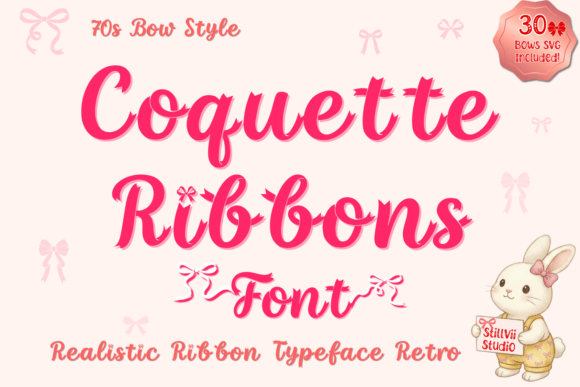
There's a distinct feeling when a design element transcends its digital form and feels tangible. You see it in the soft shadow of a well-placed element, the textured grain of a vintage photo, or the realistic drape of a fabric in a product mockup. This pursuit of tactile realism is what makes the Coquette Ribbon typeface so compelling. It’s not merely a script font; it’s a meticulously crafted display font designed to mimic the delicate, luxurious appearance of satin ribbon physically woven into your layout.
Understanding the Visual Language of Coquette Ribbon
At its core, Coquette Ribbon is a premium font that bridges the gap between digital vector art and physical craft. Unlike standard handwritten fonts or flat script fonts, this typeface features intricate details—tiny slits, subtle folds, and shadowing—that suggest actual fabric texture. The letters are constructed to interact with one another, creating a "weaving" effect where characters can appear to loop over and under, adding a genuine three-dimensional quality to your typography.
The personality of this typeface is unmistakable. It leans heavily into the "coquette" aesthetic, a style that celebrates hyper-femininity, softness, and a touch of nostalgic charm. It’s the visual equivalent of a "Self-Love Club" manifesto or a high-end boutique's branding. The font balances luxury with playfulness, making it versatile enough for both elegant wedding stationery and trendy, girl-centric branding. It’s a creative font that commands attention without shouting, perfect for creating an immediate emotional connection with an audience that appreciates detail and style.
Strategic Applications: Where Coquette Ribbon Shines
Choosing the right typeface is about more than just liking how it looks; it’s about ensuring it serves the project's goals. Coquette Ribbon excels in specific contexts where its unique texture can be appreciated without compromising clarity.
Branding and Identity
For businesses in the fashion, beauty, or lifestyle sectors, this font can become a cornerstone of a brand identity. Imagine it on the logo for a bridal boutique, a luxury candle brand, or a high-end stationery shop. Its "Old Money" sensibility suggests quality and tradition, while its playful loops keep it from feeling stuffy. However, because it is a detailed display font, it’s best reserved for logos, monograms, and headlines. Using it for body copy would be impractical; instead, pair it with a clean sans serif font or a simple serif font for supporting text to maintain readability.
Editorial and Packaging Design
In editorial design, such as magazine spreads or blog headers, Coquette Ribbon can set a powerful thematic tone. Use it for pull quotes, feature titles, or chapter headings in a lifestyle publication. In packaging design, it translates beautifully onto labels for artisanal goods, cosmetics, or gift wrap. The font’s inherent texture adds perceived value to the product, suggesting that care and artistry went into every detail.
Digital and Social Media
The "coquette" aesthetic thrives on social platforms. This font is ideal for social media graphics, Instagram story templates, and Pinterest pins. It helps content creators and influencers maintain a consistent, on-brand visual feed. When used in web design, it should be implemented as a graphic element (like an SVG or high-res PNG) rather than live web text to preserve its intricate details and ensure it renders correctly across all browsers.
Practical Considerations for Designers and Crafters
While the aesthetic appeal is strong, practical application requires a thoughtful approach. Here is how to integrate Coquette Ribbon effectively into your workflow.
Evaluating Project Fit and Readability
Before selecting this font, consider the medium. As noted in the font's specifications, the ultra-realistic details—those tiny "ribbon slits"—create very fine cut lines. This is a crucial consideration for physical applications. For sublimation, digital printing, and heat transfers, the font performs beautifully, capturing every nuance. However, for vinyl cutting (like using a Cricut or Silhouette machine), those fine lines can be problematic. The blade may struggle with such intricate paths, potentially tearing the material. If you plan to use it for vinyl projects, test a small sample first or consider simplifying the design.
Mastering Font Pairing
The strength of modern typography often lies in contrast. Because Coquette Ribbon is ornate and textured, it pairs best with simpler, more geometric typefaces. A classic sans serif font like Montserrat or Lato provides a clean, modern counterpoint that lets the ribbon text stand out. Alternatively, a traditional serif font like Garamond or Baskerville can enhance the "Old Money" feel, creating a sophisticated and timeless layout. Avoid pairing it with other decorative or handwritten fonts, as this will create visual clutter and diminish the impact of the ribbon effect.
Leveraging the Bonus Assets
The inclusion of 30 matching Ribbon Bow SVGs is a significant value-add for any designer or crafter. These assets allow you to extend the font's aesthetic beyond the letterforms. Use them as decorative accents in logo design, as standalone icons on stationery, or as part of a larger pattern for packaging design. The ability to mix and match these bows with the font gives you creative control to build a cohesive and detailed visual system.
Commercial Use and Licensing
For entrepreneurs and small business owners, understanding the licensing of a commercial font is essential. Always review the End User License Agreement (EULA) before purchasing. Confirm that the license covers your intended use, whether it’s for client work, print-on-demand products, or digital assets for sale. A properly licensed design asset protects your business and ensures you can use the font confidently in all your professional projects.
The Final Weave
Coquette Ribbon is more than just a typeface; it’s a design statement. It appeals to a specific aesthetic that values texture, femininity, and a touch of romantic realism. By understanding its strengths—its visual impact as a display font, its ideal applications in branding and digital media, and the practical considerations for physical crafts—you can use it to create designs that are not only beautiful but also strategically effective. It’s a tool for telling a story of elegance and charm, one carefully woven letter at a time.