Melia: The Dreamlike Industrial Typeface for Bold Visions
A Typeface That Feels Like a Surrealist Manifesto
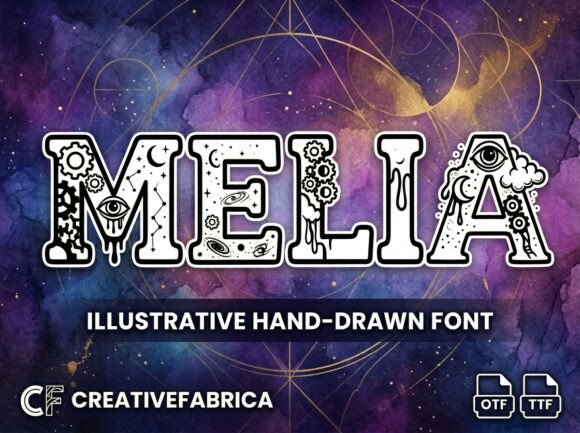
When you first encounter Melia, you don't just see a font—you experience a collision of worlds. This isn't your typical serif font or clean sans serif font. Melia is an intricate display font that embodies a "dreamlike-and-industrial" soul. Its bold, slab-serif letterforms are not merely solid shapes; they are vessels filled with a rhythmic collage of hand-drawn illustrations. Look closely, and you'll discover gears, weeping eyes, cosmic swirls, and melting textures woven into every character. It's a premium font that carries an enigmatic, almost occult personality, making it instantly captivating for projects that demand to be remembered.
The appeal of Melia lies in its duality. It merges the mechanical precision of industrial design with the fluid, subconscious imagery of surrealism. This combination gives it a unique voice that feels both ancient and futuristic, structured yet wildly imaginative. For a designer, entrepreneur, or content creator, this means having a creative font that does more than spell words—it tells a story, sets a mood, and builds an entire aesthetic universe from a single headline.
Where Melia Truly Shines: From Album Art to Brand Mystique
Understanding where a typeface like Melia works best is key to unlocking its potential. Its heavy illustrative weight and high-impact visual texture make it unsuitable for body text or long-form reading. Instead, think of it as a specialist tool for moments of high drama and thematic clarity. Here’s where it excels:
- Independent Branding & Logo Design: Melia is a premier choice for brands that lean into the mystical, mechanical, or alternative. Imagine it for an artisanal brewery with a steampunk ethos, a tarot card publisher, an independent record label, or a boutique distillery. It creates an instant, powerful brand identity that feels curated and deeply intentional.
- Music & Entertainment Art: Progressive rock, metal, psychedelic, and experimental electronic music have a natural ally in Melia. Its surreal, intricate nature is perfect for album covers, concert posters, and band logos that need to convey complex, otherworldly themes. It’s the visual equivalent of a 10-minute prog-rock epic.
- Editorial & Publishing Design: Use it for chapter titles in fantasy or sci-fi novels, magazine covers for niche art publications, or headings in a coffee-table book about alchemy or esoteric art. It adds a layer of editorial design sophistication and thematic depth that generic fonts can't match.
- Digital & Social Media Impact: In the fast-scrolling world of social media, Melia is a stopper. It’s ideal for high-impact headers, YouTube channel art, podcast cover art, and Instagram graphics for accounts focused on creative storytelling, occult aesthetics, or avant-garde fashion. Its detail ensures it looks stunning even at smaller sizes in a feed.
Practical Guidance: Choosing and Using Melia Wisely
Adopting a commercial font as distinctive as Melia requires a thoughtful approach. It’s not a plug-and-play solution for every project, but when it fits, it elevates the work tremendously. Here’s how to evaluate and implement it effectively.
Evaluating Project Fit and Readability
Before you commit, ask: Does my project’s core theme align with Melia’s "mystical-and-mechanical" personality? If you’re designing a corporate annual report or a minimalist wellness blog, the answer is likely no. However, if you’re crafting a brand for a custom motorcycle shop, a VR game, or a line of occult-themed candles, you’re on the right track. Always test Melia at the intended size. Its intricate details are its strength, but they can become muddy if used too small. Use it for headlines, logos, and pull quotes where its artistry can be fully appreciated.
Mastering Font Pairing and Hierarchy
The key to using a display font like Melia successfully is contrast and balance. Pair it with a clean, neutral typeface for body copy. A geometric sans serif font (like Futura or Helvetica Neue) or a classic, readable serif font (like Garamond or Caslon) will provide a calm foundation that lets Melia’s headlines command attention without overwhelming the viewer. Avoid pairing it with other ornate script fonts or handwritten fonts, as this will create visual chaos. Let Melia be the singular star of the show.
Leveraging Included Styles and Licensing
A quality premium font often comes with more than just the basic letters. Check if the Melia typeface family includes stylistic alternates, ligatures, or additional illustrative glyphs. These extras can give you even more creative control, allowing you to customize the look for different applications. Furthermore, ensure you understand the commercial font licensing. For most business uses—from client work to merchandise—you’ll need a proper commercial license. This isn't just a legal necessity; it supports the type designers who create these incredible design assets.
Observations from the Field
In practice, fonts like Melia work best when they are given space. Don’t crowd them with other competing visual elements. Let them breathe against a solid color background or a subtle texture. Their impact comes from their detailed artistry, which needs room to be seen. Think of Melia not just as a set of characters, but as a piece of illustrative art in its own right. When integrated thoughtfully, it can transform a standard design into a memorable piece of modern typography